
In the dynamic job market of 2025, AI integration in hiring is transforming how organizations attract and onboard top talent. With 99% of US hiring managers leveraging AI tools and a 27% surge in AI-related roles in India, this trend is reshaping recruitment globally. This SEO-optimized article explores AI recruitment, automated hiring, and machine learning in HR from Indian and US perspectives, offering actionable insights for professionals worldwide. Packed with trending keywords like talent acquisition, predictive analytics, and AI-driven recruitment, this guide ensures visibility and relevance for HR professionals, recruiters, and job seekers.
What Is AI Integration in Hiring?
AI integration in hiring uses artificial intelligence to optimize recruitment processes. From resume screening and candidate sourcing to AI-powered interviews and predictive analytics, AI streamlines tasks that once took hours. Generative AI crafts tailored job descriptions, while AI chatbots engage candidates in real time. Discussions on X reveal that AI recruitment slashes time-to-hire by up to 60%, making it indispensable for modern HR teams.
Why AI in Hiring Is Essential
1. Boosted Efficiency
AI processes thousands of resumes in minutes, cutting hiring cycles by 30%. Resume screening tools filter candidates based on skills, while AI scheduling automates interview logistics. In India, firms like Infosys use AI-driven recruitment to manage high-volume hiring efficiently.
2. Superior Candidate Matching
Predictive analytics enhances hiring precision by evaluating skills, cultural fit, and long-term potential. Platforms like HireVue report 30% better match accuracy, reducing turnover. In the US, 35,000 new AI-related jobs in Q1 2025 highlight the demand for precise talent acquisition.
3. Improved Candidate Experience
AI chatbots deliver instant updates and personalized communication, enhancing candidate experience. This strengthens employer branding, with 35% of Indian recruiters prioritizing engagement to attract top talent.
4. Advancing Diversity
Properly trained AI reduces bias by focusing on skills, not demographics. Tools like Pymetrics promote inclusivity, aligning with the 44% of global HR teams prioritizing diversity in AI recruitment.
The Benefits of AI in Recruitment
The advantages of AI in hiring are compelling, making it a must-have for modern HR teams. First and foremost, efficiency stands out. AI-powered tools can process vast amounts of data quickly, screening resumes and scheduling interviews in a fraction of the time it takes humans. According to surveys, 44% of recruiters adopt AI primarily to save time, with some reporting a 30% reduction in hiring cycles.
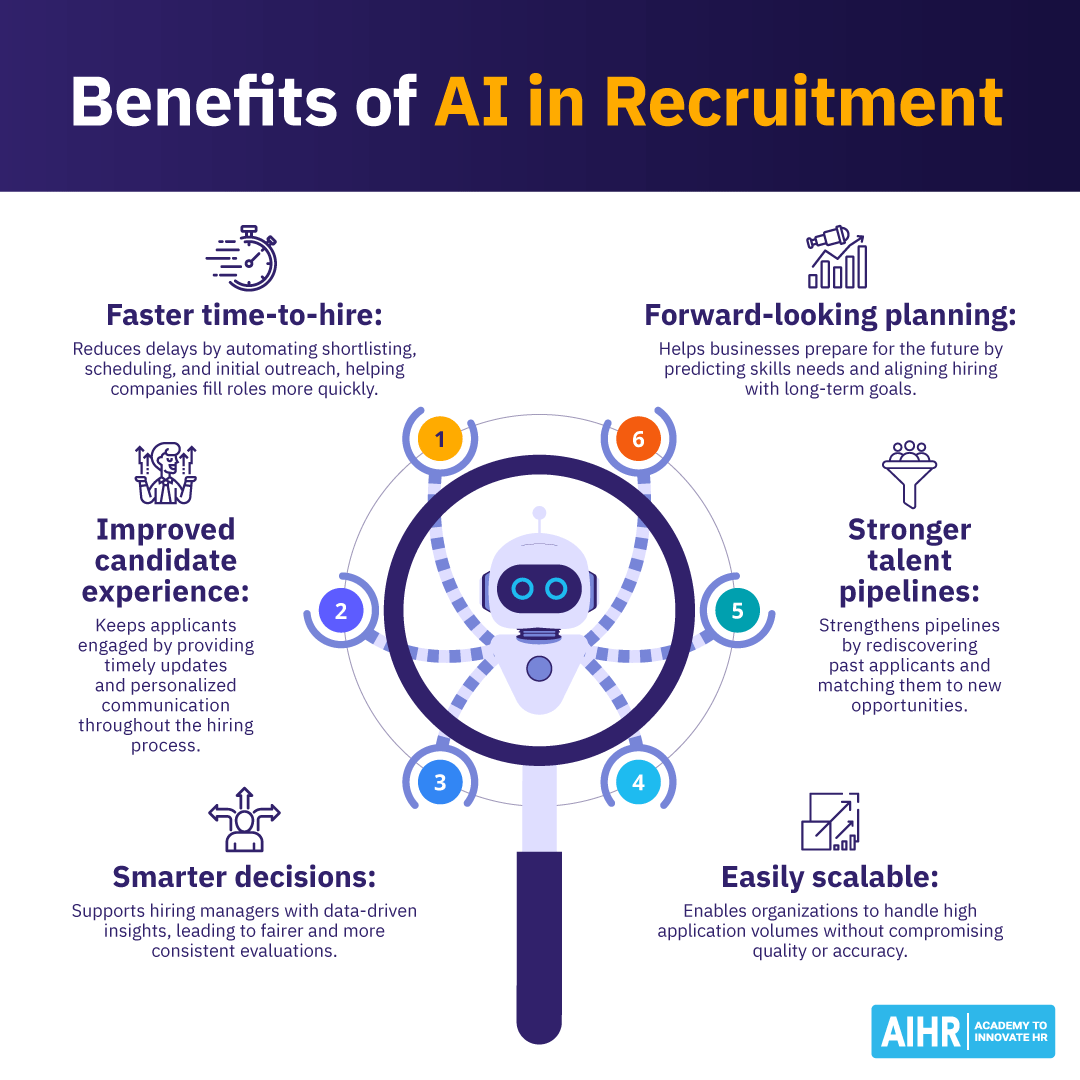
Another major perk is improved candidate matching. By leveraging predictive analytics, AI identifies not just qualifications but also cultural fit and long-term potential, strengthening talent pipelines. This leads to better quality hires and lower turnover rates. In the candidate experience realm, AI chatbots provide timely updates and personalized communication, keeping applicants engaged throughout the process.
From a diversity standpoint, when properly trained, AI can help reduce unconscious biases by focusing on skills over demographics. Tools like those from HireVue and Pymetrics boost match accuracy by 30% while promoting fairness. For professionals, this means access to a global talent pool, as AI enables e-recruitment that transcends borders. Imagine a small business in India sourcing experts from the US seamlessly—AI makes it possible.
Challenges to Navigate
AI integration in hiring isn’t flawless. Algorithmic bias risks excluding qualified candidates if AI trains on biased data. In the US, states like California are exploring regulations for transparent AI-driven recruitment. In India, 35% of recruiters fear overlooking unique skills due to automation.
Data privacy concerns align with laws like India’s DPDP Act and GDPR, requiring secure handling of candidate data. Over-reliance on automated hiring can diminish the human touch, with 66% of US candidates wary of AI-driven processes. Additionally, 47% of companies struggle with integrating AI into legacy HR systems, facing SaaS silos.

AI in Hiring: Indian Perspective
India’s IT sector is thriving, with AI-related roles growing by 27% in 2025. AI-powered interviews cut hiring time by 30%, particularly in tech and manufacturing. Salaries for AI roles have risen by 5%, with 35% of listings favoring hybrid or office-based setups. However, concerns about algorithmic bias and skill oversight push companies to adopt human-AI hybrid models. Professionals must master AI ethics and hybrid management to stay competitive.
AI in Hiring: US Perspective
The US leads in AI-driven recruitment, with tools managing millions of applications for firms like General Motors. Predictive analytics and AI onboarding are trending, per McKinsey’s 2025 report. Yet, 66% of candidates hesitate to apply for AI-driven roles, prompting tighter regulations. Human-AI hybrid models are gaining traction for accountability. Professionals should focus on data science and AI integrator roles to thrive.
Global Trends Shaping the Future
By 2028, 80% of initial interviews may be AI-led, prioritizing skills over resumes. The Stanford AI Index 2025 notes a rise in AI patents, driving HR tech innovation. AI-crafted resumes (up 45%) and custom scorecards are trending, as seen on X. Globally, human-AI hybrid models balance efficiency and empathy, setting the stage for smarter hiring.
Actionable Steps for Professionals
-
Upskill in AI: Master AI ethics, data analytics, and HR tech integration via platforms like Coursera.
-
Leverage AI Tools: Use AI-crafted resumes and predictive analytics to enhance profiles or recruitment.
-
Champion Ethics: Promote transparent, bias-free AI-driven recruitment for trust and fairness.
-
Adopt Hybrid Models: Blend AI recruitment with human judgment for optimal outcomes.
Conclusion
AI integration in hiring is redefining talent acquisition globally, delivering efficiency, precision, and inclusivity. From India’s tech surge to the US’s regulatory evolution, AI-driven recruitment is a universal force. By embracing predictive analytics, AI-led interviews, and human-AI hybrid approaches, professionals can unlock new opportunities. Integrate AI in hiring today to build diverse, high-performing teams for the future.